John Craven
The Wisdom of CrowdsJohn Craven was a naval officer whose search for the lost submarine Scorpion demonstrated how a group’s scattered, uncertain knowledge could yield a remarkably precise answer. Faced with an enormous search area and almost no reliable information about what had happened, he did not ask a few celebrated experts to decide where the submarine lay. He gathered people with different kinds of expertise, elicited their separate judgments, and used Bayes’s theorem to combine them. Five months later, the Navy found Scorpion just 220 yards from the group’s estimate—a location no individual in the group had proposed.
Identity and Background
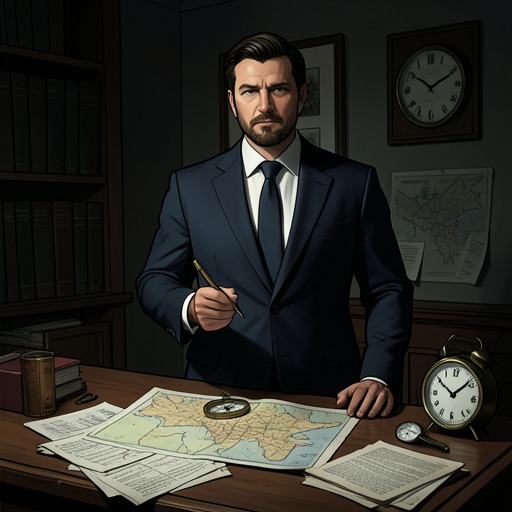
The account identifies Craven as a naval officer responsible for devising a search method after Scorpion disappeared in May 1968 while returning to Newport News from a tour of duty in the North Atlantic. The Navy knew the submarine’s last reported location, but not what had happened to it or how far it might have traveled after its last radio contact. Craven’s significance in the account rests less on any claim to solitary expertise than on the design of a process for making diverse, fragmentary knowledge work together.
The scale of the search made the usual appeal to authority seem tempting but inadequate. The initial search area was a circle twenty miles wide and many thousands of feet deep. The book presents the task as nearly hopeless: no one had enough information to identify a small, reliable search zone, and even a few leading specialists would have been asked to guess in the absence of decisive evidence. Craven’s response was to change the question from “Which expert knows the answer?” to how separate estimates might jointly constrain the answer.
Designing the Search
Craven began by constructing a series of scenarios, each offering a possible explanation of what might have happened to Scorpion. He then assembled a team of men whose knowledge ranged across mathematics, submarines, and salvage. Instead of convening them to deliberate toward a shared account, he asked each participant to estimate how likely the different scenarios were. Their judgments took the form of wagers, with bottles of Chivas Regal offered as prizes, giving the participants a concrete stake in making their best estimates.
The team placed bets on separate uncertainties in the submarine’s fate: why it had run into trouble, how fast it moved toward the ocean floor, how steeply it descended, and related details. None of these estimates, taken alone, could locate the wreck. Their value lay in the way they could be assembled. Craven’s method preserved the distinct judgments of people with different kinds of knowledge rather than replacing them with a compromise reached through group discussion.
Aggregating Uncertainty
Craven’s central move was to treat the separate estimates as inputs to a composite account of Scorpion’s final moments. He used Bayes’s theorem to calculate how new information about an event changes prior expectations of its likelihood, applying that logic to estimate the submarine’s final location. The result was roughly the group’s collective estimate, not a map supplied by any one participant.
The distinction was consequential. The location Craven calculated was not a spot any member of the group had independently selected. No individual had held in mind the same picture of the submarine’s fate that emerged when the estimates were combined. The answer was therefore collective in a strict sense: it was produced by bringing together pieces of judgment, not by identifying the smartest person and treating that person’s opinion as the group’s conclusion.
Discovery and Significance
Five months after Scorpion disappeared, a Navy ship found the submarine 220 yards from the location Craven’s group had estimated. The search’s result gave a concrete measure of the method’s success: a prediction produced from incomplete, uncertain estimates had brought the Navy remarkably close to a lost submarine in a vast, deep search area.
The account emphasizes how little any participant knew about the decisive facts. No one knew why Scorpion sank, how fast it was traveling, or how steeply it descended to the ocean floor. The group nevertheless produced an estimate that integrated those unknowns well enough to guide the discovery. Its achievement was not that each member possessed the whole answer, but that Craven’s procedure made separate fragments useful in combination.
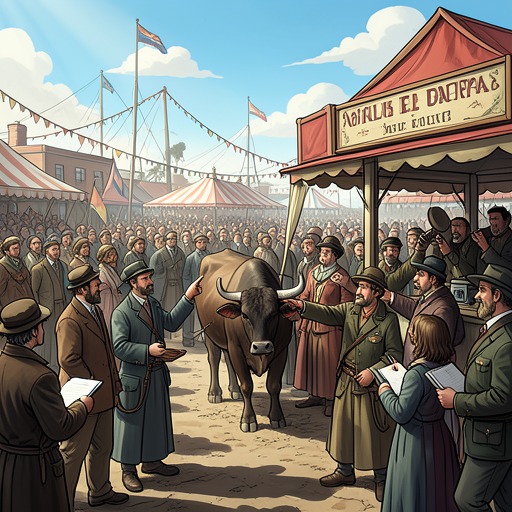
The episode serves as the book’s closing example in the Introduction, paired with an earlier case in which a group estimated the weight of an ox. The problems differ enormously in scale and complexity, yet the principle is presented as the same: under suitable conditions, a group can reach a judgment that no individual member could produce alone. The story thus makes Craven’s role more than that of a search leader. He designed a way to turn independent, diverse estimates into a single operational conclusion, showing why collective judgment can outperform a search for a lone expert.
The book also notes that Craven used the same search method successfully to locate an H-bomb lost in the ocean off Spain. That recurrence suggests the Scorpion operation was not presented as an isolated lucky guess. In both cases, the method addressed a difficult search by assembling judgments into a composite estimate; the account supplies no further details of the H-bomb search, but cites it as another instance of Craven’s success.